
Helen Keller was an American author, speaker, and activist born in Tuscumbia, Alabama, in 1880. She became deafblind after an illness at 19 months old. With the help of her teacher Anne Sullivan, Keller learned to communicate, graduated from Radcliffe College in 1904, wrote books, traveled internationally, and advocated for people with disabilities.
Helen Keller Biography
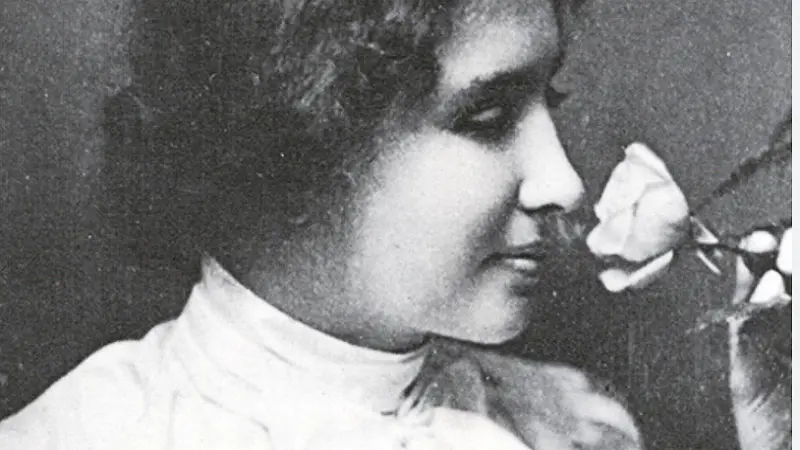
Helen Adams Keller was an American author, lecturer, political activist, and advocate for people with disabilities. Her life became one of the most widely recognized stories of education, communication, determination, and social advocacy.
Born on June 27, 1880, in Tuscumbia, Alabama, Keller lost both her sight and hearing after an illness when she was about 19 months old. The exact cause of the illness was never definitively established.
Her life changed when Anne Sullivan arrived at the Keller family home in 1887. Sullivan introduced Keller to a method of communication that eventually allowed her to connect words with people, objects, and ideas.
Keller later received a formal education, graduated from Radcliffe College, became a published author, and spent much of her adult life advocating for people with disabilities and other social causes.
Helen Keller: Quick Biography
| Information | Details |
|---|---|
| Full Name | Helen Adams Keller |
| Born | June 27, 1880 |
| Birthplace | Tuscumbia, Alabama, United States |
| Nationality | American |
| Known For | Author, lecturer, activist and disability advocate |
| Teacher | Anne Sullivan |
| College | Radcliffe College |
| Degree | Bachelor of Arts, 1904 |
| Famous Book | The Story of My Life |
| Major Organization | American Foundation for the Blind |
| Presidential Honor | Presidential Medal of Freedom |
| Died | June 1, 1968 |
| Age at Death | 87 |
Helen Keller’s Early Life
Her parents were Arthur Henley Keller and Kate Adams Keller.
During the first months of her life, Keller developed normally. At around 19 months old, however, she became seriously ill. After the illness, she could no longer see or hear.
The exact medical cause of the illness remains uncertain. Because the original medical records do not establish a definitive diagnosis, it is more accurate to describe it simply as a serious childhood illness.
Keller’s inability to hear or see made communication extremely difficult during her early childhood. She developed her own ways of communicating with people around her, but she became increasingly frustrated because she could not easily express her thoughts.
Her family eventually sought professional assistance, which ultimately led to the arrival of Anne Sullivan.
Who Was Anne Sullivan?
Anne Mansfield Sullivan became one of the most important people in Helen Keller’s life.
Sullivan arrived at the Keller home on March 3, 1887. She had studied at the Perkins Institution for the Blind and was hired to help educate the young Keller.
Sullivan began spelling words into Keller’s hand using a manual alphabet. At first, Keller could imitate the movements without understanding that the letters represented names or ideas.
A major breakthrough occurred at the family’s water pump on April 5, 1887.
Sullivan spelled the word “water” into Keller’s hand while water flowed over Keller’s other hand. Keller suddenly understood that the letters represented something in the world around her.
This moment became a turning point in Keller’s education. She soon began learning many more words and continued developing her ability to communicate.
Anne Sullivan remained Keller’s teacher and close companion for many years.
How Did Helen Keller Learn to Communicate?
Helen Keller learned communication primarily through tactile methods.
Anne Sullivan spelled words into Keller’s hand using manual signs. Keller gradually learned that these signs represented objects, actions, and ideas.
She later learned to read raised letters and Braille. She also learned to use a typewriter for writing.
Keller’s education required patience, specialized teaching methods, and considerable support from Sullivan and other educators.
Her progress demonstrated the importance of accessible education for people with disabilities.
Helen Keller’s Education
Keller’s education continued far beyond the lessons she received at home.
She attended the Cambridge School for Young Ladies as preparation for college and later entered Radcliffe College in 1900.
At Radcliffe, she studied a demanding academic curriculum. Anne Sullivan accompanied Keller and helped provide access to the material she needed for her studies.
Keller studied subjects including English, history, languages, mathematics, and literature.
In 1904, she graduated cum laude from Radcliffe College with a Bachelor of Arts degree.
Her graduation was a historic achievement. Keller became the first deafblind person to earn a Bachelor of Arts degree.
Her academic success also helped challenge assumptions about what people with disabilities could accomplish when they received appropriate educational support.
Helen Keller as an Author
Writing became a major part of Helen Keller’s professional life.
Her most famous book is The Story of My Life, which was published in 1903. The autobiography describes her early childhood, education, and relationship with Anne Sullivan.
Keller continued writing throughout her life. Her work included books, essays, speeches, and articles on subjects ranging from disability and education to politics and social issues.
Some of her notable books include:
- The Story of My Life
- The World I Live In
- Out of the Dark
- My Religion
- Midstream: My Later Life
- Teacher: Anne Sullivan Macy
- The Open Door
Her writing provides an important first-person perspective on disability, education, communication, and society.
Helen Keller’s Activism
Helen Keller was more than an inspirational author.
As an adult, she became involved in political and social activism. Her interests included women’s suffrage, workers’ rights, anti-war causes, and other progressive issues.
She also became a strong advocate for people with disabilities.
Keller used her public platform to argue that people who were blind or had other disabilities deserved better educational opportunities, employment possibilities, and access to social services.
Her political views sometimes differed sharply from mainstream opinions during her lifetime. This part of her story is important because it shows that Keller was an active participant in public debates rather than simply a symbol of overcoming adversity.
Helen Keller and the American Foundation for the Blind
Helen Keller began working with the American Foundation for the Blind in 1924.
She remained connected with the organization for more than four decades. Through this work, she helped raise public awareness about the needs of people who were blind or visually impaired.
Keller traveled across the United States and internationally, giving speeches and meeting with officials, organizations, and communities.
Her public reputation gave her an opportunity to draw attention to issues that affected people with disabilities.
She used that opportunity extensively throughout her adult life.
Helen Keller’s International Work
Helen Keller became an internationally known public figure.
She traveled to numerous countries and met political leaders, educators, and people with disabilities.
Her international work focused heavily on improving opportunities for people with vision loss and supporting humanitarian causes.
The American Foundation for the Blind records that Keller visited 39 countries during her lifetime.
These journeys helped make her advocacy international rather than limited to the United States.
Helen Keller’s Major Achievements
Helen Keller achieved several important milestones during her lifetime.
Graduating From Radcliffe College
In 1904, Keller graduated cum laude from Radcliffe College with a Bachelor of Arts degree.
She became the first deafblind person to earn a Bachelor of Arts degree.
Becoming a Published Author
Keller published numerous books, essays, and speeches. The Story of My Life became her best-known autobiographical work.
Advocating for People With Disabilities
Keller spent decades advocating for better opportunities and services for people who were blind or visually impaired.
Receiving the Presidential Medal of Freedom
In 1964, President Lyndon B. Johnson awarded Keller the Presidential Medal of Freedom, one of the highest civilian honors in the United States.
Becoming an International Public Figure
Her books, speeches, travels, and advocacy made Keller internationally recognized during her lifetime.
Helen Keller’s Later Life
Keller continued her advocacy and public work for many years.
In 1960, she suffered a stroke and subsequently lived a quieter life at her home in Connecticut.
Her last major public appearance took place in 1961.
Although she withdrew from much of public life during her final years, her work continued to influence public discussions about disability and accessibility.
Helen Keller died on June 1, 1968, at her home in Easton, Connecticut. She was 87 years old.
Her remains were placed at Washington National Cathedral alongside those of Anne Sullivan Macy and Polly Thomson.
Why Is Helen Keller Still Important?
Helen Keller remains an important historical figure because her life changed perceptions about deafblindness, education, and disability.
Her achievements showed what could become possible when people with disabilities had access to education, communication tools, teachers, and social support.
However, her importance goes beyond her personal story.
Keller was also a writer and activist who expressed strong views about political and social issues. She used her public reputation to advocate for people whose voices were often overlooked.
This broader perspective makes her life story more meaningful than a simple story about overcoming physical challenges.
Helen Keller’s Legacy
Helen Keller left behind a large collection of books, letters, speeches, photographs, and other historical records.
The American Foundation for the Blind maintains an extensive Helen Keller Archive containing materials documenting her personal life, education, writing, travels, and advocacy.
Harvard’s Radcliffe Institute also preserves Helen Keller papers and photographs connected to her education and public life.
Her legacy continues through these archives, her published works, and organizations that support people with disabilities.
Keller’s life also continues to be discussed in schools, universities, museums, and historical collections around the world.
What Can We Learn From Helen Keller’s Life?
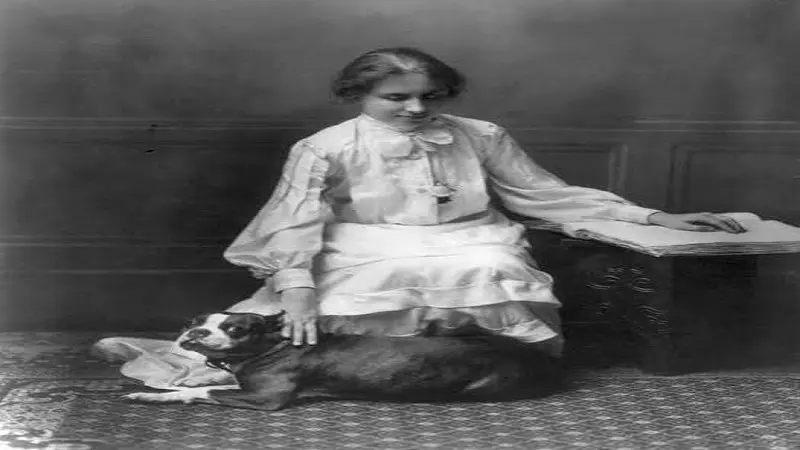
Helen Keller’s life offers several important lessons.
Education can create opportunities even when traditional methods are not suitable.
Communication can change a person’s ability to participate in society.
Support from teachers, families, and communities can make a significant difference.
Her story also reminds us that people with disabilities should be understood through their abilities, ideas, work, and individual choices rather than being defined only by disability.
Conclusion
Helen Keller was an American author, lecturer, activist, and disability advocate whose influence extended far beyond her childhood story.
Born in Alabama in 1880, she lost her sight and hearing after a serious illness as a young child. With the help of Anne Sullivan, she learned to communicate and eventually pursued a demanding academic education.
Keller graduated from Radcliffe College in 1904, became a published author, traveled internationally, and spent decades advocating for people with disabilities.
Her life remains significant because she combined education, writing, public speaking, and activism. She did not simply overcome personal barriers. She also used her public voice to challenge barriers faced by others. See more
Frequently Asked Questions.
Who was Helen Keller?
Helen Keller was an American author, lecturer, activist, and disability advocate. She became deafblind after a childhood illness and later became internationally known for her writing, education, and advocacy work.
Where was Helen Keller born?
Helen Keller was born on June 27, 1880, in Tuscumbia, Alabama, United States.
How did Helen Keller become deaf and blind?
Helen Keller lost her sight and hearing after a serious illness when she was about 19 months old. The exact cause of the illness was never definitively established.
Who was Helen Keller’s teacher?
Anne Mansfield Sullivan was Helen Keller’s teacher. Sullivan arrived at the Keller family home in 1887 and taught Keller through tactile communication and manual spelling.
Did Helen Keller go to college?
Yes. Helen Keller attended Radcliffe College and graduated cum laude in 1904 with a Bachelor of Arts degree.
What was Helen Keller’s most famous book?
Helen Keller’s best-known book is The Story of My Life, an autobiography first published in 1903.
What did Helen Keller do for people with disabilities?
Helen Keller spent decades advocating for people with disabilities. She worked with the American Foundation for the Blind and used her public platform to promote better opportunities and services for people with vision loss.
When did Helen Keller die?
Helen Keller died on June 1, 1968, in Easton, Connecticut. She was 87 years old.
What is Helen Keller remembered for?
Helen Keller is remembered for her achievements as an author, her education at Radcliffe College, her relationship with Anne Sullivan, her disability advocacy, and her international public work.